California real-estate image rules
California AB 723: a practical guide to digitally altered listing photos
California AB 723, effective January 1, 2026, requires real-estate professionals who use covered digitally altered images to disclose the alteration and give the public access to the original, unaltered image. The rule applies to advertising for the sale of real property; this guide turns the statutory requirements into a clear publishing checklist.
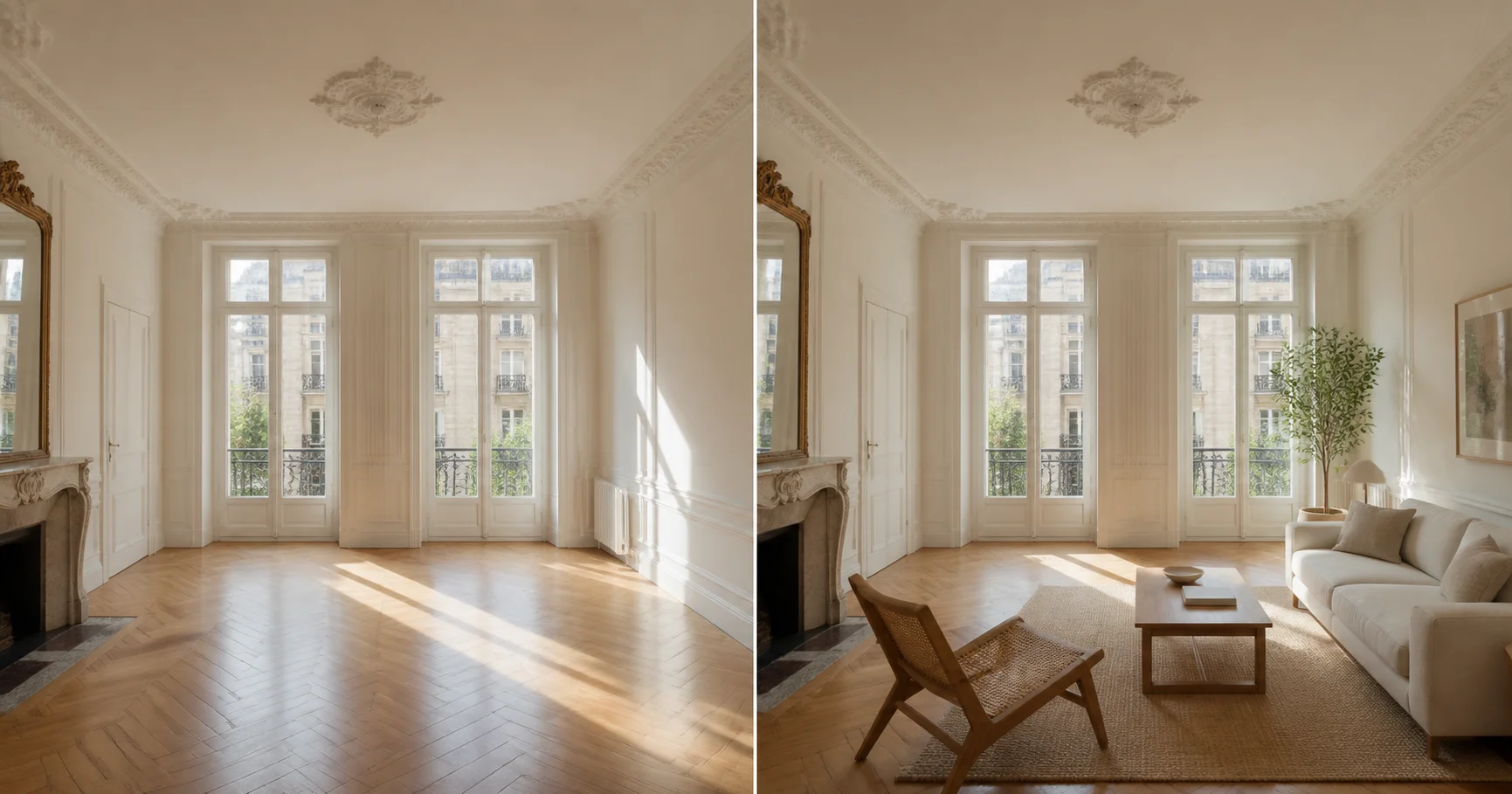
What does California AB 723 require?
For a covered advertisement or other promotional material for the sale of real property, a California broker or salesperson—or someone acting on their behalf—must disclose when an image has been digitally altered. The disclosure must be reasonably conspicuous and on or next to the image, and it must tell viewers where to find the original, unaltered image.
The California Legislature added this requirement to Business and Professions Code section 10140.8. The statute also addresses online materials: when the advertisement is on a website controlled by the professional or their representative, the unaltered image must be included in the posting or accessible from a public website that clearly identifies it. Read the official AB 723 bill text and have your broker or counsel confirm how it applies to your material.
Does virtual staging count as a digitally altered image?
It can. The law’s definition covers an image changed with editing software or artificial intelligence to add, remove, or change elements shown in the property. Adding furniture to an empty room changes what appears in the photograph, even when the home’s walls and permanent features stay untouched. Treat a virtually staged marketing image as altered, label it, and keep the original nearby.
That distinction matters: staging shows a design possibility, not a factual record of the room’s current contents. A viewer should be able to tell which image is illustrative and compare it with the unaltered photo before drawing conclusions about the property.
Which photo edits does the statute describe?
Examples in the law include changing fixtures, furniture, appliances, flooring, walls, paint color, hardscape, landscaping, a facade, a floor plan, or elements outside the property that can be seen from it—such as a view through a window or a neighboring property. It is not limited to virtual furniture placement.
By contrast, the statute excludes common image adjustments—lighting, sharpening, white balance, color correction, angle, straightening, cropping, or exposure—when they do not change the representation of the real property. The test is not simply whether software or AI was used; it is whether the edit changes what the property is represented to look like.
What should appear beside a virtually staged listing photo?
Put the disclosure where the altered image appears, not only in a separate policy page. The statement should be reasonably conspicuous, identify the photo as altered, and direct viewers to a publicly accessible place where the original is clearly identified. For a website you control, include the original in the posting or use the public link option described by the statute.
A plain-language starting point
“Virtually staged image. View the original, unaltered photo: [public link].”
This is an example, not approved legal wording. Confirm the final label, placement, link, and MLS requirements with your broker.
How can an agent publish a staged image responsibly?
- Save the camera-original, unaltered photo before making an edit.
- Review the generated image beside the source. Check windows, doors, room dimensions, fixed finishes, views, and other details that could misstate the property.
- Mark the edited image as virtually staged or digitally altered, with the label visible on or immediately beside the image.
- Provide a working public link to the clearly named original, or include the original in the controlled website posting as required.
- Check the applicable state law, brokerage policy, and MLS photo and caption rules before publishing or syndicating.
- Recheck the final listing on the places buyers will actually see it. Keep the altered image and its source paired in your media records.
Listing Curator’s staging preview places the original and the generated version side by side so an agent can inspect the difference before downloading. That review is a safeguard, not a guarantee: inspect every result and verify all property facts yourself.
Do the same disclosure rules apply outside California?
AB 723 is California law, so it should not be treated as a national rulebook. Other states, MLSs, brokerages, and advertising channels may set different or additional requirements. Check the rules for the property’s location and the destination where the image will appear; do not assume an MLS caption will satisfy every separate advertising requirement.
This guide summarizes statutory text for general information and is not legal advice. The responsible broker or qualified real-estate counsel should decide what disclosures belong on a specific listing.
Common questions about AB 723 and virtual staging
Is virtual staging allowed under California AB 723?
The law does not ban virtual staging. For covered real-estate sale advertising, digitally altered images must be disclosed and readers must be given access to the original, unaltered image.
Does AB 723 cover rental listings?
The statute addresses advertising or promotional material for the sale of real property. Do not assume that it answers every rental, MLS, or local advertising rule; confirm the requirements that apply to your listing.
Do I need to show the unaltered photo on my own website?
For a covered online advertisement on a website controlled by the broker, salesperson, or someone acting for them, the original image must be included in the posting or made available through a link to a public website that clearly identifies it.
Are ordinary photo corrections covered?
The statute excludes common adjustments such as lighting, sharpening, white balance, color correction, straightening, cropping, and exposure when they do not change the representation of the property.